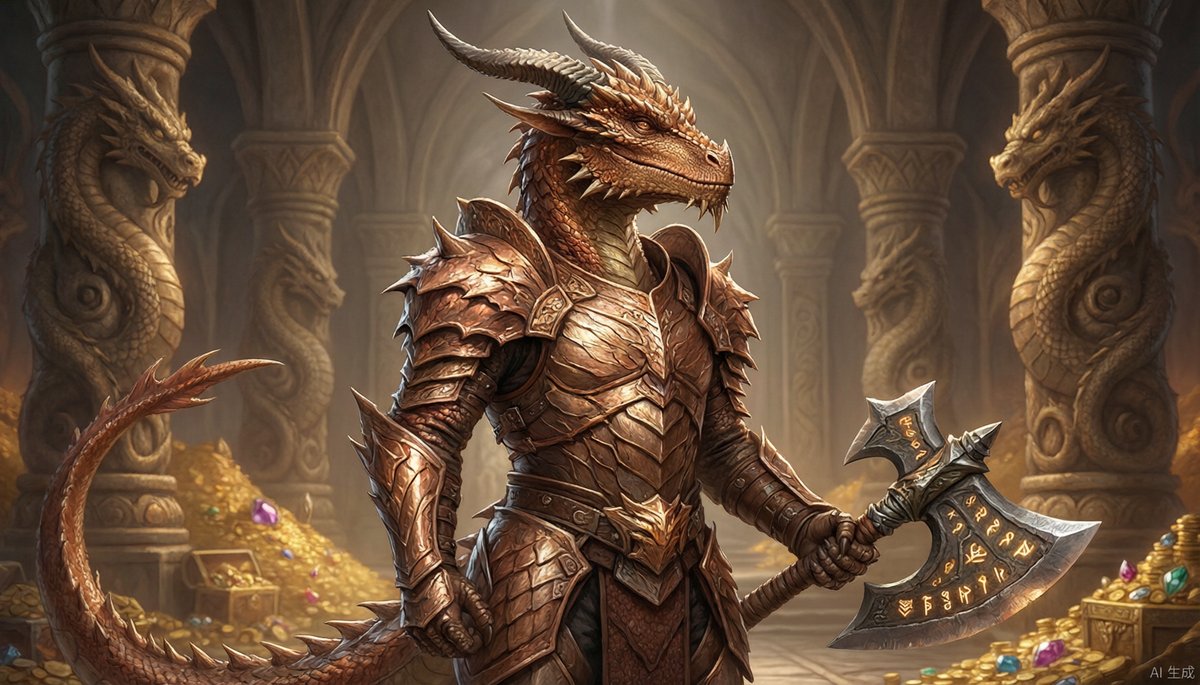
Dragonborn warrior in scaled armor, breathing elemental energy, embodying the pride of dragon blood

Dragonborn Name Generator

Generate dragonborn names for D&D 5e — clan names, personal names, dragon color heritage, noble epithets, and ancestral pride traditions

Generate Dragonborn Names for Your D&D Adventures

Blood of Dragons: How Dragonborn Names Declare Clan and Heritage

A dragonborn's name is not merely a label -- it is a declaration. When a dragonborn introduces themselves, they speak three names in rapid succession, each one a pillar of identity: who they are as an individual, what blood runs in their veins, and what deeds have earned them recognition. To call a dragonborn by only their personal name is to insult them, for it ignores the ancestral weight of their clan and the personal honor of their epithet. Among dragonborn, a name is a banner, a battle cry, and a legacy spoken aloud.

This tradition runs deeper than mere formality. Dragonborn culture places supreme value on clan, honor, and personal achievement -- and their three-part naming system encodes all three into every introduction. When you hear "Balasar Clethtinthiallor the Sun-Speaker," you learn that this individual bears the personal name Balasar, descends from the brass dragon clan Clethtinthiallor, and has earned recognition as a speaker of radiant truth. Each component tells a story, and together they form a complete identity that no other race's naming tradition can match in its layered complexity.

Understanding dragonborn naming is essential for any player who wishes to roleplay this proud race authentically, and for any Dungeon Master who wants to populate the world with dragonborn NPCs whose names carry the weight of centuries of draconic tradition.

The Three Parts of a Dragonborn Name

Every dragonborn name follows a rigid three-part structure that has remained largely unchanged for millennia. Each part serves a distinct purpose and carries specific cultural weight:

  • Personal Name (Draconic: narkh): The name given at birth but not formally claimed until the name challenge ritual is completed. Personal names are typically two to three syllables, drawn from the Draconic language, and designed to sound powerful when spoken aloud. Male names tend toward harder consonant sounds (Balasar, Kriv, Rhogar, Tarhun), while female names incorporate more flowing vowels (Akra, Biri, Dara, Jheri). A personal name identifies the individual but does not define them -- that is the role of the other two parts.
  • Clan Name (Draconic: thinar): The inherited name that connects the dragonborn to their ancestral lineage. Clan names are long, complex Draconic words that most non-dragonborn find nearly impossible to pronounce. Each clan name traces back to a specific type of dragon ancestor -- red, blue, green, black, white, brass, bronze, copper, gold, or silver. The clan name is never shortened or abbreviated; to do so would be to deny one's heritage. A dragonborn who cannot speak their full clan name is considered uneducated, and one who refuses to speak it is considered dishonored.
  • Epithet (Draconic: zorrak): The earned title that declares the dragonborn's personal achievements. Epithets are not given at birth -- they are accumulated throughout life through deeds of honor, wisdom, strength, or elemental mastery. A young dragonborn may have no epithet at all, while an elder might carry three or four. Common epithets include "the Flamecaller," "Stormbringer," "the Honorable," "the Unyielding," and "the Resplendent." Each epithet tells a specific story that other dragonborn can read like a resume.

The full formal introduction of a dragonborn therefore sounds like: "[Personal Name] [Clan Name] [Epithet]" -- for example, "Rhogar Daardendrian the Wavecaller." In casual settings among trusted companions, dragonborn may use only their personal name, but in any formal or public context, the full three-part name is expected.

Clan Names by Dragon Color and Element

The clan name is the backbone of dragonborn identity. It connects each individual to a lineage stretching back to the first dragonborn, who were created by the great dragons themselves -- chromatic dragons of evil intent or metallic dragons of noble purpose. The clan name immediately tells other dragonborn what elemental heritage you carry, what values your clan upholds, and what role your bloodline has played in dragonborn history.

Chromatic Dragonborn Clans

Chromatic dragonborn descend from the evil dragon types -- red, blue, green, black, and white. Their clan names tend to be harsh and sibilant, reflecting the dangerous nature of their ancestors. However, most chromatic dragonborn have rejected the evil ways of their progenitors and instead channel their elemental heritage toward neutral or good ends. The clan name is a reminder of where they came from, not where they are going.

Red Dragonborn Clan: Verthisathurgiesh (the Red Flame)
Element: Fire
Reputation: Passionate, fierce, proud. Red dragonborn clans are known for their temper and their loyalty. Once a Verthisathurgiesh dragonborn considers you a friend, they will defend you with fire and fury.
Common Epithets: Flamecaller, the Burning, Ashbringer, Emberlord, the Inferno
Example: Balasar Verthisathurgiesh the Flamecaller
Blue Dragonborn Clan: Myastan (the Storm Wing)
Element: Lightning
Reputation: Strategic, disciplined, commanding. Blue dragonborn clans value order and hierarchy. Their members often become military leaders, judges, or administrators.
Common Epithets: Thundercaller, the Lightning, Stormbringer, Skyrend, the Tempest
Example: Khorva Myastan the Thundercaller
Green Dragonborn Clan: Linxakasendalor (the Venom Fang)
Element: Poison
Reputation: Cunning, patient, persuasive. Green dragonborn clans are known for their diplomacy and their subtlety. They prefer to win conflicts through words rather than weapons, though they are capable of both.
Common Epithets: Venomcaller, the Toxic, Blightbringer, Miasma, the Corrosive
Example: Sora Linxakasendalor the Venomcaller
Black Dragonborn Clan: Kerrhylon (the Acid Maw)
Element: Acid
Reputation: Resilient, secretive, enduring. Black dragonborn clans survive in harsh environments and develop a thick-skinned philosophy. They are the last to trust outsiders but the most loyal once trust is earned.
Common Epithets: Acidcaller, the Corrosive, Meltmaw, the Dissolver, Blighttongue
Example: Narkerrh Kerrhylon the Acidcaller
White Dragonborn Clan: Shestendeliath (the Frost Breath)
Element: Cold
Reputation: Stoic, hardy, independent. White dragonborn clans are the most feral of the chromatic lines, often preferring solitary life in cold mountains. They value self-reliance above all else.
Common Epithets: Frostcaller, the Freezing, Wintermaw, Icevein, the Glacial
Example: Dree Shestendeliath the Frostcaller

Metallic Dragonborn Clans

Metallic dragonborn descend from the noble dragon types -- gold, silver, bronze, copper, and brass. Their clan names tend to be more melodic and resonant, reflecting the noble nature of their ancestors. Metallic dragonborn clans are generally more integrated into humanoid societies and are more likely to serve as diplomats, protectors, and community leaders.

Gold Dragonborn Clan: Ankhalab (the Radiant Flame)
Element: Fire (radiant)
Reputation: Noble, just, inspiring. Gold dragonborn clans produce more paladins and clerics than any other lineage. They hold themselves to the highest moral standards and expect the same from others.
Common Epithets: Radiantcaller, the Holy, Sunfire, the Divine, Lightbringer
Example: Tarhun Ankhalab the Lightbringer
Silver Dragonborn Clan: Kythaelan (the Moon Scale)
Element: Cold (radiant)
Reputation: Compassionate, wise, graceful. Silver dragonborn clans are known for their empathy and their love of mortal cultures. They are the most likely to live among other races and adopt their customs.
Common Epithets: Mooncaller, the Silver, Starfire, the Celestial, Moonveil
Example: Akra Kythaelan the Mooncaller
Bronze Dragonborn Clan: Daardendrian (the Wave Rider)
Element: Lightning
Reputation: Adventurous, bold, freedom-loving. Bronze dragonborn clans are drawn to the sea and to exploration. They make excellent sailors, navigators, and coastal defenders.
Common Epithets: Wavecaller, the Tidal, Stormrider, the Coastal, Surgeborn
Example: Rhogar Daardendrian the Wavecaller
Copper Dragonborn Clan: Dadalan (the Earth Walker)
Element: Acid
Reputation: Practical, humorous, grounded. Copper dragonborn clans value humor and hard work in equal measure. They are the most approachable of the metallic dragonborn and often serve as mediators.
Common Epithets: Earthshaper, the Grounded, Stonevoice, the Steady, Terraformer
Example: Biri Dadalan the Earthshaper
Brass Dragonborn Clan: Clethtinthiallor (the Sun Scale)
Element: Fire
Reputation: Talkative, curious, hospitable. Brass dragonborn clans love conversation and storytelling. They are the most social of all dragonborn and often serve as ambassadors, bards, and diplomats.
Common Epithets: Sunspeaker, the Blazing, Heatwave, the Desert Wind, Sandscorch
Example: Dara Clethtinthiallor the Sunspeaker

The Name Challenge Ritual: Earning Your Personal Name

A dragonborn is not born with their name -- they earn it. While a hatchling is given a placeholder name by their parents, this name is not considered their true name until they complete the name challenge ritual, a rite of passage that tests the young dragonborn's worthiness to carry their clan's legacy into the world.

The Ritual Process

The name challenge ritual varies between clans, but all versions share common elements. The young dragonborn, typically between the ages of 12 and 15 in human years, must face a trial that tests their connection to their elemental heritage. This trial is designed by the clan elders and is tailored to the individual's strengths and weaknesses.

  • Red Dragonborn Trial: The candidate must endure a test involving fire -- perhaps walking through a ring of flames, retrieving an object from a blazing forge, or standing firm while a clan elder breathes fire at them. The trial tests courage and the ability to channel passion into purpose.
  • Blue Dragonborn Trial: The candidate must demonstrate strategic thinking during a simulated battle or complex puzzle. The trial tests discipline and the ability to command respect through wisdom rather than force.
  • Green Dragonborn Trial: The candidate must negotiate a difficult agreement between two feuding clan members or solve a riddle that requires patience and perception. The trial tests cunning and the ability to see beyond surface appearances.
  • Black Dragonborn Trial: The candidate must survive alone in a harsh environment for three days, relying on their wits and resilience. The trial tests endurance and the ability to endure hardship without complaint.
  • White Dragonborn Trial: The candidate must track and bring down a dangerous beast in frozen wilderness. The trial tests self-reliance and the ability to survive in the harshest conditions.
  • Gold Dragonborn Trial: The candidate must make a difficult moral choice where both options have significant consequences. The trial tests justice and the ability to uphold honor even when it is costly.
  • Silver Dragonborn Trial: The candidate must demonstrate empathy by understanding and resolving the emotional pain of another being. The trial tests compassion and the ability to connect across cultural divides.
  • Bronze Dragonborn Trial: The candidate must navigate treacherous waters or complete a dangerous coastal rescue. The trial tests courage and the ability to act decisively in crisis.
  • Copper Dragonborn Trial: The candidate must defuse a tense social situation using humor and practical wisdom. The trial tests social intelligence and the ability to bring people together.
  • Brass Dragonborn Trial: The candidate must tell a story that moves the entire clan to laughter, tears, or action. The trial tests communication and the ability to inspire through words.

Failure and Second Chances

Not all dragonborn pass their name challenge on the first attempt. Those who fail are not shamed -- they are given time to grow and prepare for a second attempt. However, a dragonborn who fails multiple times may be assigned a humbler personal name, one that reflects their struggle rather than their triumph. This is not a permanent mark of shame, but it serves as motivation to persevere.

Some dragonborn who fail the ritual choose to leave their clan and seek their worth in the wider world. These wanderers often adopt new names that reflect their journey, and some return years later with deeds so impressive that the clan elders willingly grant them their original name along with an honorific epithet.

The Moment of Naming

When a dragonborn passes their name challenge, the clan gathers for a formal naming ceremony. The elder speaks the young dragonborn's new name for the first time, and the assembled clan repeats it in unison -- a moment that is meant to imprint the name on the collective memory of the clan. From that day forward, the dragonborn is expected to introduce themselves with their full three-part name in all formal settings.

Exiled Dragonborn: When the Clan Name Is Lost

The most severe punishment a dragonborn clan can impose is exile -- and with exile comes the stripping of the clan name. A dragonborn who commits a grave offense against their clan (cowardice in battle, betrayal of clan secrets, violation of the honor code) may be declared vaskar -- nameless. This is considered a fate worse than death, for it means the dragonborn has no lineage, no heritage, and no place in the world.

The Stripping Ceremony

During the stripping ceremony, the clan elder publicly speaks the exiled dragonborn's name for the last time, then declares it void. The dragonborn's clan name is removed from the clan records, and their personal name is spoken no more. The exiled individual is expected to leave clan territory immediately and never return.

Names of the Exiled

Exiled dragonborn face a difficult choice: adopt a new name or remain nameless. Most choose to create a new identity, drawing from their experiences in exile. Common patterns include:

  • Place Names: Taking the name of the land where they were exiled. "Miran, exiled from Verthisathurgiesh" might become simply "Miran of the Western Reach."
  • Deed Names: Adopting a name that reflects their first great achievement after exile. A dragonborn who saves a village from bandits might call themselves "Vaelor the Redeemed."
  • Null Names: Some exiled dragonborn refuse to adopt a new name, calling themselves simply "the Nameless" or "Vaskar" as a reminder of what they lost. This is considered the most tragic path, as it means the dragonborn has given up on reclaiming their honor.
  • Common Names: A few exiled dragonborn adopt a name from the culture they now live among, as a way of fully embracing their new life. This is seen as both pragmatic and somewhat shameful by other dragonborn.

Redemption and Restoration

An exiled dragonborn is not beyond redemption. If they perform a deed of such extraordinary honor that it restores their family's reputation, the clan elders may vote to restore their original name and readmit them to the clan. This is rare -- it typically requires the dragonborn to risk their life in service of their clan or to accomplish something that benefits the entire dragonborn race. Those who achieve restoration are given an additional epithet marking their return, such as "the Restored" or "the Redeemed."

Complete Dragonborn Character Examples

Here are five complete dragonborn characters with full three-part names, clan affiliations, earned epithets, and backstories that demonstrate how the naming system works in practice:

Balasar Verthisathurgiesh the Flamecaller
Clan: Verthisathurgiesh (red dragonborn, fire element)
Personal Name: Balasar (earned by walking through a ring of white-hot forge fire at age 14 without flinching)
Clan Name: Verthisathurgiesh (inherited; the clan is known for passionate leadership and fierce loyalty)
Epithet: the Flamecaller (earned after channeling elemental fire to save his village from a winter siege)
Class: Paladin of the Oath of Devotion
Backstory: Balasar was born to a minor branch of the Verthisathurgiesh clan, expected to live a quiet life as a smith. But when his village was besieged by frost giants during the harshest winter in living memory, he discovered that his connection to fire was far stronger than any smith's forge. He walked into the burning heart of the giant's siege engine and destroyed it from within, earning the epithet "the Flamecaller." He now travels the world as a paladin, using his fire to protect the innocent and his clan's honor to inspire others.
Khora Myastan the Thundercaller
Clan: Myastan (blue dragonborn, lightning element)
Personal Name: Khora (earned by solving the War Council Riddle at age 12, demonstrating strategic genius)
Clan Name: Myastan (inherited; the clan is known for military discipline and strategic thinking)
Epithet: the Thundercaller (earned after commanding a battlefield unit that turned the tide of the Skirmish at Greyfield)
Class: Fighter (Battle Master)
Backstory: Khora was born into a long line of military commanders. Her name challenge involved solving a tactical puzzle that had stumped clan elders for a generation. She solved it in under an hour, earning not just her personal name but immediate respect as a strategic mind. Her epithet came years later when she led a small unit against a much larger force and won through superior positioning and timing. She now seeks to prove that blue dragonborn strategy can win wars without unnecessary bloodshed.
Tarhun Ankhalab the Lightbringer
Clan: Ankhalab (gold dragonborn, radiant fire element)
Personal Name: Tarhun (earned by choosing to confess a lie that would have brought him honor, demonstrating moral courage)
Clan Name: Ankhalab (inherited; the clan is known for noble leadership and unwavering moral standards)
Epithet: the Lightbringer (earned after discovering a sacred artifact that had been lost for centuries and returning it to its rightful temple)
Class: Cleric of the Light Domain
Backstory: Tarhun's name challenge was unusual -- rather than facing a physical trial, he was tested morally. He had been credited with an achievement that actually belonged to another dragonborn. When given the choice to accept false glory or speak the truth, he chose truth, and the clan elders declared that this moral courage was the truest expression of gold dragonborn values. His later discovery of the lost Sunfire Chalice earned him the epithet "the Lightbringer," and he now serves as a traveling cleric, bringing light to dark places.
Narketh Kerrhylon the Nameless (formerly "Narketh Kerrhylon the Dissolver")
Clan: Kerrhylon (black dragonborn, acid element)
Personal Name: Narketh (earned by surviving seven days alone in the Acid Marshes at age 13)
Clan Name: Kerrhylon (stripped after being accused of cowardice during the Battle of the Black River)
Epithet: the Dissolver (formerly held; stripped along with clan name)
Current Status: Exiled, seeking redemption
Class: Ranger (Gloom Stalker)
Backstory: Narketh was a promising young warrior of the Kerrhylon clan who froze during a critical battle, causing his unit to retreat. His clan name and epithet were stripped in a public ceremony, and he was declared vaskar -- nameless. Rather than accept a new name among outsiders, he has kept his personal name as a reminder of what he lost. He now travels alone, seeking a deed of such extraordinary courage that his clan will have no choice but to restore his name. He fights with a desperation that borders on recklessness, driven by the hope of redemption.
Dara Clethtinthiallor the Sunspeaker
Clan: Clethtinthiallor (brass dragonborn, fire element)
Personal Name: Dara (earned by telling a story so moving that three clan elders wept openly)
Clan Name: Clethtinthiallor (inherited; the clan is known for diplomacy, storytelling, and hospitality)
Epithet: the Sunspeaker (earned after negotiating a peace treaty between two warring human kingdoms through sheer persuasive power)
Class: Bard (College of Eloquence)
Backstory: Dara comes from a long line of diplomats and storytellers. Her name challenge involved telling a story before the full clan council -- a tradition unique to brass dragonborn. The story she told was so powerful that it moved the usually stoic elders to tears, earning her not just her name but the immediate prediction that she would become the clan's greatest speaker. That prediction came true when she brokered peace between two human kingdoms that had been fighting for decades. She now travels the world collecting stories and brokering agreements, believing that words are mightier than any breath weapon.

Using Dragonborn Names in Your Campaign

For Players: Building Your Dragonborn's Identity

When creating a dragonborn character, start with the three-part name and build your backstory from there. Ask yourself:

  • What is your clan's dragon ancestry? This determines your elemental breath weapon, your clan name, and the cultural values you were raised with. A red dragonborn is expected to be passionate and fierce; a silver dragonborn is expected to be compassionate and wise.
  • What was your name challenge? Every dragonborn's personal name is earned through a specific trial. What did you do to earn your name? Was it a physical feat, a mental challenge, a moral test, or a social triumph?
  • What epithets have you earned? As you adventure, you will accumulate epithets. Each one should be a specific deed that other characters can reference. "Balasar the Flamecaller" tells a story; "Balasar the Strong" does not.
  • Are you in good standing with your clan? Most dragonborn characters are active members of their clan, but some may be exiled, estranged, or simply far from home. Your relationship with your clan shapes how you introduce yourself and how other dragonborn treat you.

For DMs: Creating Dragonborn NPCs and Factions

When creating dragonborn NPCs, the three-part name system gives you instant depth. A dragonborn who introduces themselves with all three parts is proud and confident. One who uses only their personal name is either being informal (a sign of trust) or hiding their identity (a sign of trouble). One who has no clan name is almost certainly exiled, which is a story hook in itself.

Step 1: Choose the clan. What type of dragon does this clan descend from? This determines the clan name, the elemental affinity, and the cultural values.

Step 2: Generate the personal name. Use the generator to create a Draconic-sounding name. For important NPCs, decide what trial they passed to earn this name.

Step 3: Assign epithets. Important NPCs should have at least one epithet that tells you something about their history. A dragonborn with multiple epithets is experienced and accomplished.

Step 4: Determine clan standing. Is this NPC in good standing, exiled, or wandering? This shapes their motivation and how they interact with player characters.

Names as Plot Devices

Dragonborn names can drive your campaign's plot in several ways:

  • A clan seeking to restore a lost member: The exiled Narketh Kerrhylon needs to perform a deed of extraordinary courage to be readmitted. The party can help him find the opportunity he needs -- or they can exploit his desperation.
  • A clan name dispute: Two branches of the same clan disagree over who has the right to use the clan name. The party is asked to arbitrate or investigate the historical records.
  • An epithet challenge: A young dragonborn believes they have earned an epithet, but the clan elders disagree. The party must witness the deed and confirm (or deny) the claim.
  • A clan under threat: An ancient dragon -- the progenitor of the clan -- has awakened and demands tribute. The clan must decide whether to submit, fight, or negotiate. The party's dragonborn character is caught between loyalty to their clan and their own moral compass.

Related Generators

Frequently Asked Questions

How does dragonborn naming work in D&D 5e?

Dragonborn use a three-part naming system: a personal name earned through a challenge ritual, a clan name inherited from their draconic ancestry (tied to their dragon color), and an epithet earned through notable deeds. For example, "Balasar Clethtinthiallor the Sun-Speaker" contains all three elements. The personal name declares who they are, the clan name declares where they come from, and the epithet declares what they have done.

What are dragonborn clan names based on?

Dragonborn clan names are directly tied to the type of dragon ancestor the clan descends from. Red dragon clans use names like Verthisathurgiesh (the Red Flame), blue dragon clans use names like Myastan (the Storm Wing), and gold dragon clans use names like Ankhalab (the Radiant Flame). Each clan name is a complex Draconic word that other races struggle to pronounce. The clan name immediately tells other dragonborn what elemental heritage you carry.

What is the dragonborn name challenge ritual?

Before a dragonborn can claim their adult name, they must undergo a name challenge ritual. This involves performing a deed that demonstrates their worthiness to carry the clan name -- typically a feat of strength, cunning, or elemental affinity. A red dragonborn might face a trial by fire, while a white dragonborn might endure a night in freezing conditions. Those who fail the challenge must wait and try again, sometimes taking on a humbler name until they prove themselves.

Can dragonborn be exiled from their clan?

Yes. Dragonborn who bring shame to their clan may be exiled, which means they lose the right to use their clan name. Exiled dragonborn often adopt new names that reflect their solitary status or their new path. Some take on the name of their place of exile, while others choose names that declare their independence. An exiled dragonborn who later redeems themselves may be welcomed back and allowed to reclaim their clan name.

How do dragonborn epithets work?

Dragonborn epithets are earned titles that reflect notable deeds, personality traits, or elemental affinity. Unlike orc epithets which focus on violence, dragonborn epithets can reflect wisdom, honor, leadership, or elemental mastery. Examples include "the Flamecaller," "Stormbringer," "the Honorable," "the Unyielding," or "the Resplendent." A dragonborn may accumulate multiple epithets over their lifetime, each one a chapter in their personal history.

Do dragonborn use Draconic language names?

Yes, dragonborn names originate from the Draconic language, which is characterized by sibilant sounds, hard consonants, and complex syllable structures. Names like Balasar, Kriv, Rhogar, and Tarhun all follow Draconic phonetic patterns. When dragonborn live among other races, they may adopt a Common-language nickname that is easier for non-dragonborn to pronounce, but their formal name always remains in Draconic.

What is the difference between chromatic and metallic dragonborn names?

Chromatic dragonborn (red, blue, green, black, white) tend to have harsher-sounding clan names with more sibilant and guttural Draconic sounds, reflecting their chromatic dragon heritage. Metallic dragonborn (gold, silver, bronze, copper, brass) often have clan names with more flowing, resonant sounds. However, the fundamental three-part naming structure (personal + clan + epithet) is the same for all dragonborn regardless of ancestry.

Can I use these dragonborn names for my D&D campaign?

Absolutely. All generated names are free to use in your tabletop RPG campaigns, novels, games, or any creative project. Our names follow established D&D 5e dragonborn naming conventions from official source material and are checked against famous characters like Balasar and Kriv to avoid IP issues with published campaign settings.