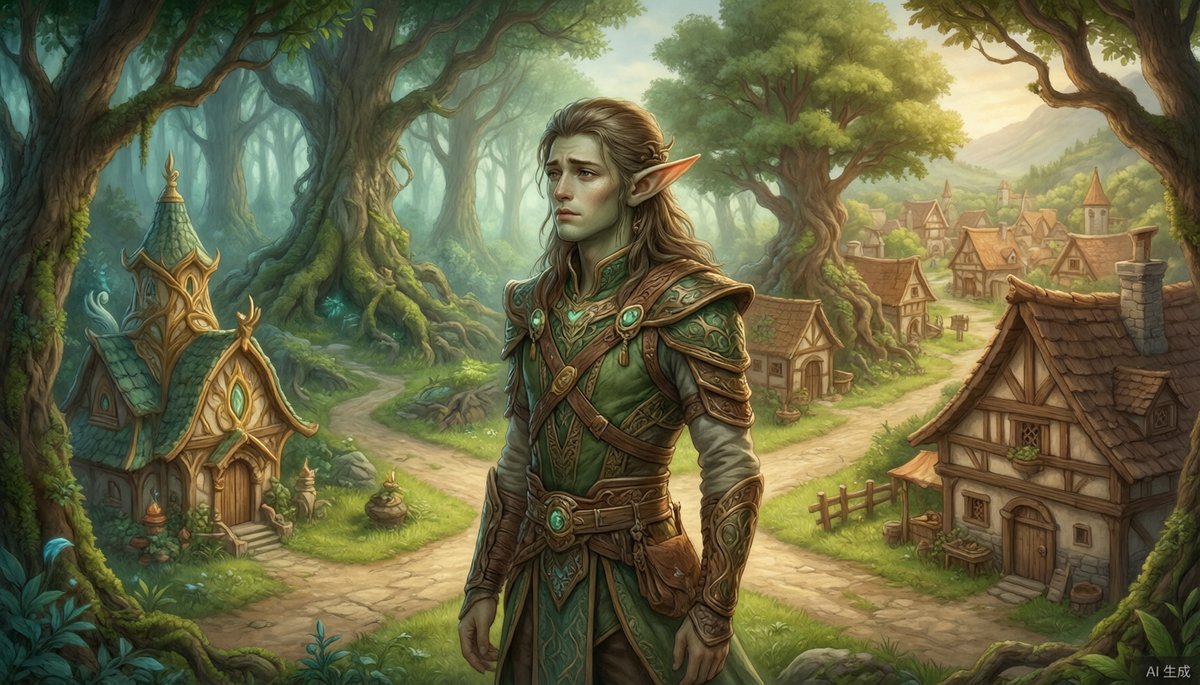
Graceful half-elf with both elven and human features, embodying the balance between two worlds

Half-Elf Name Generator

Generate half-elf names for D&D 5e — elven birth names, human chosen names, blended heritage names, and identity navigation traditions

Between Two Worlds: Blended Heritage Names for Half-Elves

Between Two Worlds: The Half-Elf Naming Identity Crisis

For half-elves, a name is never just a name. It is a declaration of identity -- a statement about where they belong in a world that rarely makes space for those who walk between two cultures. Every half-elf faces a naming choice that no pure-blooded elf or human ever has to make: do you carry your elven parent's flowing, ancient name? Do you adopt the practical, grounded name of your human heritage? Or do you forge something entirely new -- a blended name that honors both bloodlines but belongs to neither tradition completely?

This is not a cosmetic choice. It is the first and most fundamental decision a half-elf makes about who they are and how the world will perceive them. The name a half-elf carries determines which doors open, which communities welcome them, and which ones close their gates. In frontier towns where mixed heritage is common, a blended name might earn immediate respect. In ancient elven courts, an elven name might open doors that would otherwise remain sealed. In human villages suspicious of fey blood, a simple human name might be the difference between acceptance and ostracism.

Half-elves live between 150 and 180 years -- long enough to watch every human friend age and die, short enough that the elven communities they might join will always see them as fleeting visitors. This temporal limbo shapes everything about their naming. A half-elf's name must answer a question that neither elves nor humans ever face: where do you belong when you do not fully belong anywhere?

The Three Paths of Half-Elf Naming

Half-elf naming traditions have evolved over centuries of coexistence between elves and humans. While every individual's choice is deeply personal, three broad paths have emerged that cover the vast majority of half-elf naming decisions. Each path carries its own social consequences, its own roleplaying depth, and its own statement about identity.

Path One: The Elven Heritage Name

Some half-elves choose to carry a name drawn entirely from elven tradition. These names feature flowing vowels, soft consonants, and nature-referencing compounds that immediately signal elven heritage to anyone who hears them. An elven heritage name is a deliberate claim to the ancient, magical culture of the fey peoples.

Why choose this path: The half-elf feels a deep connection to their elven parent, wants to honor that heritage publicly, or plans to live among elven communities where an elven name grants certain social advantages. Some half-elves choose this path because they were raised by their elven parent and never knew another naming tradition.

What it signals: "I am connected to the ancient peoples. I value tradition, magic, and the long view of history. My blood carries the song of the elder races."

The cost: In human communities, an obviously elven name marks the half-elf as different. They may face suspicion, exoticization, or assumptions that they are "more elf than human." In elven communities, purists may view the name as presumptuous -- a half-blood claiming an elven identity they have not earned through centuries of experience. The half-elf must constantly prove that the name is not a costume but a genuine expression of identity.

Path Two: The Human Tradition Name

Other half-elves adopt a name from human naming conventions. These names tend to be shorter, more practical, and often occupational or descriptive. They blend seamlessly into human society and do not immediately reveal the bearer's mixed heritage. A human tradition name is, in many ways, an act of passing -- of choosing to be seen as fully human.

Why choose this path: The half-elf was raised primarily in human society, feels more comfortable with their human side, or wants to avoid the prejudice that an elven name might trigger in certain communities. Some half-elves choose human names because they lost their elven parent young and have only human memories to anchor them.

What it signals: "I am practical, grounded, and part of the human world. I value action over contemplation, and I choose to walk among mortals as one of them."

The cost: Among elves, a human name can seem like a rejection of heritage. Elven communities may view the half-elf as having "chosen sides" and treat them accordingly. The half-elf may feel they are denying a part of themselves -- the elven blood that gives them keen senses, fey ancestry, and a lifespan that will outlast every human they love. As the decades pass and human friends grow old, the human name may start to feel like a lie.

Path Three: The Blended Name

The most creative and increasingly popular path is the blended name -- one that deliberately combines elements from both elven and human naming traditions. This might mean an elven first name with a human surname, a human first name with an elven surname, or a portmanteau that fuses linguistic elements from both languages into something entirely new. Blended names are a declaration that the half-elf refuses to choose one parent's culture over the other.

Why choose this path: The half-elf embraces both heritages equally and wants their name to reflect that dual identity. They have accepted that they are something new -- not half of anything, but wholly themselves. This path is especially common in frontier settlements and cosmopolitan cities where mixed heritage is the norm rather than the exception.

What it signals: "I am both and neither. I carry two worlds within me and I will not deny either. I am not incomplete -- I am unprecedented."

The cost: Purists from both cultures may find blended names confusing or inappropriate. Some elves consider them linguistic abominations -- a corruption of ancient naming traditions. Some humans find them pretentious -- an attempt to be special rather than simply belonging. However, in cosmopolitan cities and frontier settlements, blended names are increasingly common and respected as a sign of cultural fluency.

Elven Naming Patterns: The Heritage Option

When a half-elf chooses an elven name, they are drawing from one of the oldest and most sophisticated naming traditions in the D&D multiverse. Elven names are not randomly assembled sounds -- they follow specific linguistic patterns that have evolved over millennia of continuous culture. Understanding these patterns helps half-elves choose names that feel authentic rather than costume-like.

Elven First Name Structure

Elven first names typically follow a two or three-syllable pattern with specific phonetic characteristics:

  • Flowing Vowels: AE, IA, IE, EI, OA -- these diphthongs create the characteristic "musical" quality of elven speech. An elven name should sound like it could be sung.
  • Soft Consonants: L, R, S, TH, N, M -- harsh sounds like K, G, B are rare in elven names. When hard consonants appear, they are typically softened by surrounding vowels: -lith, -ren, -thas.
  • Gender Markers: Male names often end in -ion, -or, -en, -ith, -as; female names in -iel, -wen, -ra, -dis, -lia, -nne. Neutral names may end in -el, -rin, -th.
  • Meaning Layers: Every elven name carries meaning in the Elvish language. Aelindra roughly translates to "noble song"; Caelith means "star-light"; Thalorien means "guardian of the forest." A half-elf choosing an elven name should know what it means.

Elven Surname Patterns

Elven surnames are compound words that reference natural elements, celestial bodies, or ancestral deeds. They function as miniature poems, each one telling a story about the family's history:

  • Nature Compounds: Moonwhisper, Starweaver, Dawnbreeze, Leafwalker, Riversong, Windrunner -- these surnames connect the family to the natural world and suggest a life lived in harmony with it.
  • Celestial References: Starborn, Moontouched, Sunfollower, Nightwalker, Dawnbringer -- these surnames suggest elven connection to the cosmic and the eternal, marking families who claim descent from ancient celestial events.
  • Ancestral Deeds: Dragonslayer, Shadowbane, Oathkeeper, Truthspeaker, Pathfinder -- these surnames commemorate specific achievements by ancestors and set expectations for current bearers.
  • Place Names: Many elven surnames reference specific groves, rivers, or regions that the family has inhabited for centuries, functioning as both identity and territorial claim.

Half-elves who choose elven surnames often select ones that reference the place where their parents met or where they were raised, creating a new branch of the family's naming tradition that acknowledges their unique origin.

Example Elven Heritage Names: Aelindra Moonwhisper, Caelith Starweaver, Thalorien Dawnbreeze, Miravel Leafwalker, Erevan Nightsong, Lirael Sunfollower, Gaelin Rivermere, Ithilor Windrunner

Human Naming Patterns: The Other Heritage

Human naming traditions in the D&D multiverse are remarkably diverse because human cultures are remarkably diverse. Unlike elves, who maintain relatively consistent naming patterns across millennia of continuous civilization, humans adapt their names to local customs, occupations, and practical needs. This diversity is both a challenge and an opportunity for half-elves choosing human names -- they have far more options, but less guidance on which to pick.

Common Human Name Patterns

Human names in the Forgotten Realms and similar settings tend to follow these patterns:

  • Short Given Names: Aldric, Brennan, Catherine, Darian, Elena -- typically two to three syllables, easy to pronounce, easy to remember. Human names prioritize practicality over poetry.
  • Occupational Surnames: Smith, Fletcher, Thatcher, Cooper, Mason -- reflecting the family's traditional trade. These surnames ground the half-elf in the working world of human commerce and craft.
  • Descriptive Surnames: Brown, Swift, Strong, Fair -- originating as nicknames that became hereditary. These surnames suggest that human identity is earned through action, not inherited through bloodline.
  • Patronymic Surnames: Richardson, Johnson, Aldricsson -- "son/daughter of" patterns common in northern human cultures. These surnames emphasize lineage and family connection in a way that parallels elven ancestral names.

Regional Human Variations

Human naming varies dramatically by region, giving half-elves many options for connecting to specific cultural backgrounds:

  • Northern/Cold Regions: Norse-influenced names like Bjorn, Astrid, Ragnar, Freya with patronymic surnames. A half-elf from the north might be "Astrid Bjornsdottir" -- a name that sounds nothing like elven tradition.
  • Southern/Warm Regions: Mediterranean-influenced names like Marco, Lucia, Alessandro, Valentina. These names carry warmth and expressiveness that contrasts with elven formality.
  • Western/Coastal: Anglo-influenced names like William, Catherine, Edmund, Margaret with occupational surnames. These names suggest trade, seafaring, and practical settlement.
  • Eastern/Continental: Slavic-influenced names like Dmitri, Katarina, Vladislav, Nadia. These names carry weight and history, suggesting ancient human traditions that parallel elven longevity.

A half-elf can choose human names that reflect the specific region where they were raised, adding another layer of personal identity to their naming choice. The regional variation means that two half-elves both using human names might sound completely different based on their upbringing.

Example Human Tradition Names: Aldric Fletcher, Brennan Cooper, Catherine Swift, Darian Mason, Elena Thatcher, Marcus Wright, Astrid Bjornsdottir, Lucia Fairchild

Creating Blended Names: The Art of Dual Heritage

Blended names are where half-elf naming becomes truly creative and where the unique identity of the half-elf finds its purest expression. There are three main approaches to creating a name that honors both traditions, each with its own philosophical implications about what it means to be neither fully elf nor fully human.

Approach One: Elven First + Human Last

This is the most common blended pattern. The half-elf carries an elven given name that honors their elven parent, paired with a human surname that acknowledges their human heritage and practical identity in the working world.

Examples: Aelindra Fletcher, Caelith Cooper, Thalorien Swift, Miravel Mason, Erevan Thatcher

This approach says: "I carry the beauty of elven culture in my personal identity, but I work and live in the human world. My soul is elven; my hands are human."

Approach Two: Human First + Elven Last

Less common but equally valid, this pattern uses a human given name paired with an elven surname. The half-elf presents as human in daily interaction but carries their elven heritage as a family identity -- a hidden depth revealed only when someone asks about their lineage.

Examples: Aldric Moonwhisper, Brennan Starweaver, Catherine Dawnbreeze, Darian Leafwalker, Marcus Nightsong

This approach says: "I move through the human world comfortably, but my bloodline carries ancient power. Do not mistake my practical exterior for an ordinary heritage."

Approach Three: The Portmanteau Fusion

The most creative approach creates an entirely new name by fusing linguistic elements from both traditions. This requires understanding the phonetic building blocks of both elven and human naming and combining them into something that belongs to neither language but echoes both.

Examples: Aelric (Ael- from elven + -ric from human), Thalwen (Thal- from elven + -wen from human), Mirael (Mir- from human + -ael from elven), Caelitha (Cael- from elven + -itha from human), Daviel (Dav- from human + -iel from elven)

This approach says: "I am not half of anything -- I am something entirely new. My name exists in no language because I exist in no single world."

How Different Communities React to Name Choices

A half-elf's name does not exist in a vacuum. The communities they interact with will react differently based on their own cultural biases, prejudices, and expectations. Understanding these reactions helps half-elf characters navigate social situations and helps players roleplay the consequences of their naming choice.

In Elven Communities

Elven societies are not monolithic in their reaction to half-elves, but naming choices do matter. An elven heritage name is generally well-received, especially if the half-elf can demonstrate knowledge of elven culture and history. However, traditionalist elves may view it as presumptuous -- "You carry our name but not our centuries of training." A human name in an elven community immediately marks the half-elf as an outsider, which can be either an advantage (no expectations) or a disadvantage (constant othering). A blended name may confuse elven traditionalists but often intrigues younger, more cosmopolitan elves who appreciate the creativity.

In Human Communities

Human reactions are more varied because human communities are more diverse. In cosmopolitan cities, half-elves with any naming choice are common and generally accepted. In isolated villages, an elven name may trigger suspicion or superstition -- "Those pointy-eared folk are not to be trusted." A human name is usually the path of least resistance in human communities, allowing the half-elf to blend in more easily. A blended name in a human city might be seen as charming and exotic, while in a rural village it might be seen as confusing -- "Which side are you on, exactly?"

In Mixed or Frontier Communities

Frontier settlements, trade cities, and adventuring parties are where half-elves often find the most acceptance. In these environments, a blended name is often the most respected choice because it signals adaptability and cultural fluency -- traits that frontier communities value above all else. An elven name might grant the half-elf a certain mystique that opens doors to fey-touched patrons and contacts. A human name helps them relate to the majority population in trade and governance. The key insight is that in mixed communities, the half-elf's actions matter more than their name -- but the name sets the first impression that determines whether those actions get a fair hearing.

The Name Change: How Half-Elves Evolve Their Identity Over Time

One of the most powerful and unique aspects of half-elf naming is that names can change. Unlike elves, whose names are given at birth and remain fixed for centuries of continuous identity, or humans, whose names are typically permanent within their short lifespans, half-elves often change their names as their sense of identity evolves. This is not considered unusual in half-elf culture -- it is expected, even celebrated.

Common patterns of name evolution include:

  • Youthful Human Name to Mature Elven Name: A half-elf raised in human society uses a human name during their younger years to fit in, then adopts an elven name as they grow older and more confident in their heritage. This often coincides with their first visit to an elven community, when they realize that hiding behind a human name feels like denying a part of themselves.
  • Birth Name to Chosen Name: A half-elf receives a name from their parents (usually reflecting one heritage over the other) and later chooses a new name that better represents their own identity. This "chosen name" ceremony is a significant coming-of-age moment, often occurring around the half-elf's twentieth year when they have lived long enough to understand who they are.
  • Single Name to Blended Name: A half-elf who initially used either a purely elven or purely human name later modifies it to incorporate elements of both traditions, reflecting a hard-won acceptance of their dual nature. This change often follows a period of identity crisis -- a moment when the half-elf realized that choosing one heritage meant denying the other.
  • Public Name and Private Name: Some half-elves maintain two names -- one for public use in the dominant culture they are interacting with, and one for private use among family and close friends. This dual-naming practice is more common than outsiders realize and reflects the practical reality of living between two worlds. The public name is a tool; the private name is the truth.

The name change is not merely cosmetic. When a half-elf changes their name, they are making a statement about who they are and who they want to become. It is an act of self-definition that carries deep emotional and cultural significance. For DMs, a half-elf NPC who changes their name during the campaign is a powerful narrative moment that players will remember.

Complete Half-Elf Character Examples

Here are four complete half-elf characters, each demonstrating a different naming approach and the identity journey that accompanies it. These examples show how the naming choice shapes the character's backstory, motivations, and roleplaying opportunities.

Aelindra Moonwhisper
Naming Choice: Full Elven Heritage Name
Race & Class: Half-Elf Bard (College of Lore) -- Level 5
Background: Sage -- Raised by elven parent in elven community, studied at a prestigious academy
Identity Journey: Aelindra was given a fully elven name by her mother, who believed that names had the power to shape destiny. Growing up in an elven grove, Aelindra was surrounded by pure-blooded elves who treated her with polite distance -- never cruel, but never fully welcoming either. Her elven name opened doors to education and cultural knowledge, but it also created expectations she could never fully meet. She could not trance. She aged faster than her elven peers. Her ears were only slightly pointed. The name that was meant to be a gift sometimes felt like a costume she could never quite fill. She turned to music and storytelling as a way of earning her place -- if she could not be elven enough by blood, she would be elven enough by art.
Adventuring Motivation: Left the elven grove to find her own identity separate from the name she was given. She collects stories of other half-elves who have navigated the same identity challenges, hoping to write a definitive guide to the half-elf experience.
Name Breakdown: Aelindra (elven first name meaning "noble song") + Moonwhisper (elven surname referencing the moonlit grove where she was born)
Brennan Fletcher
Naming Choice: Full Human Tradition Name
Race & Class: Half-Elf Fighter (Battle Master) -- Level 6
Background: Soldier -- Raised by human father in a military family, joined the city guard
Identity Journey: Brennan's human father gave him a solid, unmistakably human name because he wanted his son to have every advantage in a human world. "Let them hear 'Brennan Fletcher' and think 'carpenter's son,'" his father said. "Not 'half-breed with the pointy ears.'" Brennan grew up in a military family where his elven heritage was acknowledged but never emphasized. His slightly pointed ears, his unusually keen eyesight, his resistance to charm magic -- these were just facts about him, not identity markers. The human name let him blend in completely, which was both a relief and a source of quiet guilt. He sometimes wondered what his elven parent would have named him, and whether that parent even knew he existed.
Adventuring Motivation: Discharged from the military after a conflict with a superior officer who made derogatory comments about his heritage. Now adventuring to prove that a "Fletcher" can be a hero on his own terms, regardless of which parent's name he carries. He has never told anyone that his human name was a deliberate choice by his father -- most people assume it is simply his birth name.
Name Breakdown: Brennan (human given name meaning "little rain" or "drop of water" in old Common) + Fletcher (occupational surname meaning "arrow-maker")
Thalric Dawnfletcher
Naming Choice: Blended Name (Portmanteau Fusion)
Race & Class: Half-Elf Ranger (Hunter) -- Level 4
Background: Outlander -- Raised on the frontier between elven and human territories
Identity Journey: Thalric's parents -- an elven mother and human father -- deliberately created a blended name that incorporated both traditions. "Thal-" comes from the elven root meaning "guardian," while "-ric" is a human suffix meaning "powerful ruler." The surname "Dawnfletcher" combines an elven nature reference (Dawn) with a human occupational term (Fletcher) from his father's trade. Growing up on the frontier, Thalric was surrounded by other mixed families and blended names were common. He never felt the identity crisis that half-elves in more homogeneous communities experience. His name was a daily reminder that he was something new, not something incomplete. He learned to track in both elven forests and human plains, speaking both languages with equal fluency, belonging to both worlds without being claimed by either.
Adventuring Motivation: The frontier where he grew up is being encroached upon by expansionist human settlers who see the borderland communities as lawless and expendable. He is venturing into the wider world to find allies and resources to protect the place where his parents met and where blended names are not a statement but simply a fact of life.
Name Breakdown: Thalric (Thal- elven root "guardian" + -ric human suffix "powerful") + Dawnfletcher (Dawn elven nature reference + Fletcher human occupational surname)
Miravel (formerly "Miriam Thorne")
Naming Choice: Adopted/Chosen Name (Name Change)
Race & Class: Half-Elf Warlock (Archfey Patron) -- Level 5
Background: Charlatan -- Born in human society, left to discover elven heritage
Identity Journey: Born "Miriam Thorne" to a human family that never disclosed her elven parentage, Miriam grew up feeling perpetually different -- too tall for some things, too strange for others. She lived in a small human village where the closest thing to magic was the herbalist's remedies. At age twenty, she discovered a letter from her elven mother hidden in her father's belongings. The letter revealed her true heritage and gave her elven birth name: Miravel. The name change was transformative. Shedding "Miriam" felt like removing a costume that never fit. Adopting "Miravel" felt like stepping into her true self for the first time. However, the change was not without cost -- her human family felt rejected, and some human friends could not adjust to the new name. Her father refused to use "Miravel" for months, calling her "Miriam" with deliberate insistence that felt like a small wound each time.
Adventuring Motivation: Her Archfey patron appeared shortly after the name change, drawn to the magical resonance of her true elven name awakening. She adventures to understand the connection between names and magic, and to find her elven mother who may still be alive centuries later. The search for her mother is also a search for the meaning of her name -- what does Miravel truly signify, and what destiny does it carry?
Name Breakdown: Miravel (elven name meaning "wonderful sea" or "marvel of the waters") -- formerly Miriam Thorne (human name + descriptive surname). The name change marks a fundamental identity transformation from hidden heritage to claimed destiny.

Practical Guidance for Half-Elf Players and DMs

For Players: Building Your Half-Elf's Identity Through Naming

When creating a half-elf character, start with the naming choice and build your backstory from there. The name is not the last thing you choose -- it is the first thing that defines who your character is and how the world sees them.

  • What heritage split defines your character? Were you raised by your elven parent, your human parent, or by both? This determines which naming traditions were available to you and which social pressures shaped your choice.
  • Which naming path did you choose? Elven heritage, human tradition, blended, or adopted? Each choice tells a different story about your character's relationship with their dual identity.
  • What does your name signal to others? When someone hears your name, what do they assume about you? Is that assumption accurate, or does your character subvert expectations?
  • Will your name change during the campaign? Half-elves are one of the few D&D races where name changes are culturally expected and narratively meaningful. Consider whether a life event -- discovering your elven parent, being rejected by a human community, finding inner peace -- might trigger a name change.

For DMs: Using Half-Elf Naming as a Worldbuilding Tool

Half-elf naming offers rich worldbuilding opportunities that go far beyond character creation. Consider how your setting handles mixed heritage and what that means for the world you are building.

  • Are there legal implications to naming choices? In some settings, half-elves might be required to register their heritage or restricted from using certain elven names. This creates natural tension and plot hooks.
  • Do certain communities have naming ceremonies for half-elves? A coming-of-age ceremony where a half-elf chooses or receives their true name can be a powerful scene in your campaign.
  • Are there historical figures whose blended names became legendary? Perhaps a famous half-elf hero's blended name became the standard template that modern half-elves emulate -- or rebel against.
  • How do elven and human records handle half-elf names differently? An elven archive might catalog a half-elf under their elven name; a human registry under their human name. This bureaucratic discrepancy can create interesting complications.

Common Half-Elf Naming Mistakes (And How to Avoid Them)

Mistake #1: Ignoring the Identity Question

Wrong: Picking a name because it "sounds cool" without considering what it means for the character's identity.

Fix: Ask yourself: "Why did my character choose or receive this name? What does it say about how they see themselves?"

Mistake #2: Making the Name Too Perfect

Wrong: Creating a blended name that perfectly resolves all identity tensions without any social cost.

Fix: Give the name a cost. Maybe elven traditionalists find it awkward. Maybe humans cannot pronounce it correctly. Maybe the character themselves are not fully satisfied with it yet.

Mistake #3: Forgetting That Names Change

Wrong: Treating the character's starting name as permanent and unchangeable.

Fix: Plan at least one potential name change during your character's arc. Decide what life event would trigger it and what the new name would signify.

Mistake #4: Copying Famous Half-Elves

Wrong: Naming your character after a famous half-elf from D&D lore or fantasy literature.

Fix: Use the famous character as inspiration for naming patterns, not as a direct source. Create your own name that follows similar linguistic rules but is entirely distinct.

Names as Plot Devices

Half-elf names can drive your campaign's plot in several compelling ways:

  • A half-elf seeking to reclaim an elven name: An NPC was stripped of their elven name by a traditionalist council and now seeks the party's help to prove their worthiness to bear it again.
  • A name that reveals hidden parentage: A character discovers that their seemingly human name contains a hidden elven component that points to a specific noble elven family -- and a political scandal.
  • Competing naming traditions: Two half-elf factions disagree about whether blended names are legitimate, and the party is drawn into the conflict.
  • A prophetic name: An ancient elven prophecy references a half-elf by name, and the party must determine whether the named individual has already been born -- or whether they need to find someone to bear that name.

The Deeper Meaning of Half-Elf Names

At its core, half-elf naming is about the universal struggle for identity in a world that demands categorization. Every person -- not just half-elves -- faces the challenge of defining themselves in ways that honor all parts of their heritage while still presenting a coherent identity to the world. Half-elves simply experience this challenge more acutely and more visibly than most.

The three naming paths -- elven, human, and blended -- are not just linguistic choices. They are philosophical statements about the nature of identity itself. Is identity inherited (elven name) or chosen (human name)? Is it a synthesis of multiple influences (blended name) or something that must be discovered through lived experience (adopted name)? Half-elf characters who grapple with these questions through their naming choices become some of the most nuanced and compelling characters in any campaign.

For DMs, half-elf naming offers rich worldbuilding opportunities. How does your setting handle mixed heritage? Are there legal implications to naming choices? Do certain communities have naming ceremonies for half-elves? Are there historical figures whose blended names became legendary? The answers to these questions add depth to your world and create natural plot hooks that emerge organically from character identity.

For players, the half-elf naming choice is an invitation to explore what it means to belong -- or to choose belonging -- in a world that often forces people into categories. Whether your half-elf carries an elven name, a human name, a blended name, or a chosen name, that name is the first word of their story. Make it count.

Related Generators

Frequently Asked Questions

What are the three naming choices half-elves face?

Half-elves can choose an elven name inherited from their elven parent (flowing vowels, nature compounds, multi-syllabic elegance), a human name from their human parent's culture (practical, occupational, shorter), or a blended name that combines elements from both traditions. This choice is deeply personal and reflects where the half-elf feels they belong -- or where they want the world to see them.

How do elven naming patterns work for half-elves?

Elven names use flowing vowels (AE, IA, IE, EI), soft consonants (L, R, S, TH, N), and nature-inspired compounds. Examples include Aelindra, Caelith, Thalorien, and Miravel. Half-elves who choose elven names often do so to honor their elven heritage, signal their connection to the fey, or identify with elven communities. The name typically includes a surname that references natural elements: Moonwhisper, Starweaver, Dawnbreeze.

What makes human naming different from elven naming for half-elves?

Human names in D&D tend to be shorter, more practical, and often occupational or descriptive: Smith, Fletcher, Thatcher, or simple given names like Aldric, Brennan, Catherine. Half-elves who choose human names often do so to blend into human society, distance themselves from elven heritage, or honor the parent who raised them. The choice signals "I am more human than elf" and can be a deliberate act of identity.

How do you create a blended half-elf name?

Blended names combine elements from both traditions. You might take an elven first name with a human surname (Aelindra Fletcher), a human first name with an elven surname (Brennan Moonwhisper), or create a portmanteau that fuses both languages (Aelric from Ael- + -ric, combining elven prefix with human suffix). Blended names represent the half-elf's unique dual identity and are the most common choice among half-elves who embrace both heritages equally.

How do different communities react to half-elf name choices?

Elven communities may view a half-elf with an elven name as presumptuous or welcoming, depending on the individual's acceptance. Human communities might find an elven name exotic or suspicious. A blended name often receives the warmest reception in mixed settings because it acknowledges both heritages. In frontier towns and cosmopolitan cities, half-elves with any naming choice are common, but in isolated human villages, an obviously elven name might draw unwanted attention.

Can I use these half-elf names for my D&D campaign?

Yes. All generated names are free to use in your tabletop RPG campaigns, novels, games, or any creative project. Our names follow established D&D 5e half-elf naming conventions and are checked against famous characters to avoid IP issues.

Do half-elves change their names over their lifetime?

Yes, and this is one of the most unique aspects of half-elf naming. Because half-elves live 150-180 years -- longer than humans but shorter than elves -- they often change their names as their sense of identity evolves. A young half-elf might use a human name to fit in, then adopt an elven name as they mature and connect with their heritage, or vice versa. Some older half-elves settle on a blended name that finally feels right after decades of searching for identity.

What are famous half-elf characters and their naming choices?

In D&D lore, famous half-elves demonstrate different naming approaches. Some use purely elven names to claim their heritage (like those seeking positions in elven courts), others adopt human names to blend into human society, and a few create entirely new naming traditions that become emulated by other half-elves. The naming choice often reflects the character's central conflict -- are they more elf or more human? -- and their resolution of that conflict.