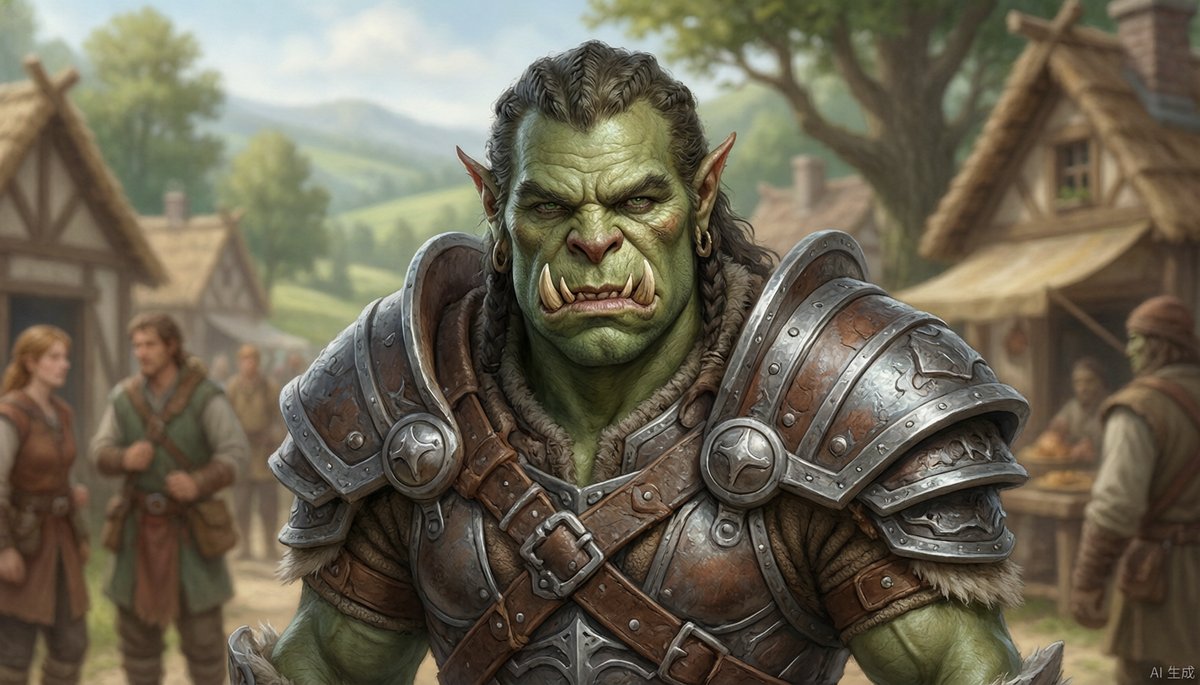
For a half-orc, a name is never a given -- it is a battlefield. Every name they carry was either fought for, earned through blood and deed, or taken as an act of defiance against a world that would rather they had no identity at all. Half-orcs do not inherit names the way humans do, and they cannot simply receive them the way full-blooded orcs do from their war chiefs. Instead, half-orcs must prove their right to every syllable of every name they bear.
This is not melodrama. It is the lived reality of half-orc culture across the D&D multiverse. A half-orc who cannot defend their name -- through strength, through deed, through sheer force of will -- loses that name. And a half-orc without a name is a half-orc without a people, without a history, without a place in any community. The stakes of naming could not be higher.
Understanding half-orc naming is essential for any player who wants to create a character with genuine depth, and for any DM who wants to populate their world with half-orcs whose names tell stories of struggle, acceptance, and hard-won identity. Every half-orc name is a thesis statement about who this person is and what they have done to earn the right to stand before you.
The Dual Naming Tradition: Birth Name and Chosen Name
The foundation of half-orc naming is the dual naming tradition -- the practice of carrying two names that represent the two halves of their heritage. This is not unique to half-orcs (many mixed-heritage individuals across fantasy cultures carry multiple names), but the half-orc version is distinctive in its intensity and its consequences. Among humans, a second name is a convenience. Among orcs, a second name is a promotion. Among half-orcs, a second name is a survival strategy.
The Orcish Birth Name
The first name a half-orc receives is their orcish birth name, given by their orc parent or by the tribal shaman at the time of birth. This name reflects the circumstances of their birth and the hopes (or fears) of the tribe.
- Sound Pattern: Harsh consonants (G, K, R, Th, Gr, Kr), short guttural vowels (U, O, A)
- Common Structures: Single word (Grumbar, Thokk, Urgash) or compound (Bonechewer, Skullmark)
- Gender Patterns: Male names tend toward harder sounds (Gr-, Kr-, Th-); female names may include softer consonants but remain distinctly orcish
- Meaning: Always references something about the birth circumstances -- the weather, a recent battle, an omen, a loss, or a hope
The birth name cannot be changed. It is permanent, given by the tribe, and represents where the half-orc came from regardless of where they choose to go.
The Chosen Name
The second name is the one the half-orc chooses for themselves -- or has chosen for them by a community that accepts them. This name represents who they are becoming, not who they were born as.
- Human Names: Many half-orcs choose human names when living among humans: Aldric, Brennan, Marcus, Helena, Catherine
- Orcish Names: Some choose a second orcish name that they feel better represents their identity than their birth name
- Blended Names: Others create names that fuse orcish and human linguistic elements: Grumric, Thorald, Kaelthok
- Title Names: Some adopt names based on deeds or aspirations: Shield, Breaker, Pathfinder, The Steadfast
The chosen name can be changed. It evolves as the half-orc evolves, reflecting their current identity rather than a fixed birthright.
The tension between birth name and chosen name is the central drama of half-orc identity. The birth name says "this is where you came from." The chosen name says "this is who I decide to be." For most half-orcs, navigating the space between these two declarations is a lifelong process. Some embrace both names proudly. Others reject one in favor of the other. A rare few create entirely new names that belong to neither tradition -- declarations of radical self-invention.
Earning Epithets: The Deed-Based Name System
Beyond their birth name and chosen name, half-orcs can earn epithets -- additional name components that commemorate specific deeds. Unlike goblin epithets (which are earned through cunning) or elven epithets (which are earned through mastery), half-orc epithets are earned through proof of worth. The deed must demonstrate that the half-orc has value to their community -- whether that community is orc, human, or something in between.
The epithet system exists because half-orcs start with a deficit of trust in both cultures. Full-blooded orcs earn respect through strength. Humans earn respect through contribution. Half-orcs must do both -- and do them visibly, do them undeniably, and do them repeatedly. An epithet is the formal recognition that a half-orc has crossed that threshold.
Orcish Epithets: Earned Through Strength
In orc society, epithets are awarded for feats of physical power, combat prowess, and survival against overwhelming odds. An orc shaman or chieftain formally bestows the epithet after witnessing or verifying the deed. The standards are brutal because orc society is brutal -- an epithet earned through a minor accomplishment will be mocked, not respected.
For a half-orc, earning an orcish epithet is particularly significant because it means the orc community has accepted them as worthy of recognition. Full-blooded orcs do not automatically receive epithets -- they must earn them too. When a half-orc earns one, it signals that they have proven themselves by orc standards, which are among the most demanding in the D&D multiverse. The half-orc who carries an orcish epithet has stared down the strongest warriors in the room and walked away with their respect.
Human Epithets: Earned Through Service
In human society, epithets are awarded for acts of valor, protection, and service to the community. A human elder, lord, or community leader typically bestows the epithet, often in a public ceremony. Where orc epithets celebrate individual strength, human epithets celebrate contribution to the collective.
For a half-orc, earning a human epithet is significant for a different reason. It means the human community has looked past their orcish heritage and recognized their worth as a person. This acceptance is harder to earn than orcish recognition because humans carry cultural prejudices against half-orcs that orc communities do not (orcs respect strength regardless of heritage; humans often judge by appearance first). A half-orc who earns "Shield of the Village" has overcome not just the threat they defended against, but the deep-seated fear and suspicion of the people they protected.
Dual Epithets: Bridging Two Worlds
The rarest and most respected achievement is earning epithets from both cultures. A half-orc known as "Grumbar Bonebreaker, Shield of the Northern March" has proven their worth in orc combat and human defense simultaneously. These dual-epithet half-orcs often become natural leaders in border communities where both cultures coexist, because they have demonstrated the ability to excel by both sets of standards.
The Name Challenge: Defending Your Right to a Name
Perhaps the most dramatic aspect of half-orc naming is the name challenge -- a formal confrontation in which a half-orc must defend their right to use a particular name. This tradition exists in both orc and human communities, though the mechanics differ. A name challenge is not an insult -- it is a recognized cultural practice that tests whether the half-orc truly embodies the qualities their name claims.
Orcish Name Challenges
In orc society, a name challenge occurs when another orc disputes the half-orc's right to an orcish name or epithet. The challenge typically takes the form of a physical contest -- not necessarily to the death, but a genuine test of strength, endurance, or combat skill. The logic is straightforward: if you cannot defend your name in combat, you have not truly earned it. The challenger does not need to prove malice -- they are simply testing whether the name-bearer is worthy.
A half-orc who loses a name challenge must abandon the challenged name and choose a new one. This is not merely symbolic -- losing a name in orc society is a genuine loss of status and identity. Some half-orcs have gone through five or six names before finding one they can defend. Each lost name is a lesson, a scar, and a story.
Human Name Challenges
In human communities, name challenges are less physical but no less intense. A human who questions a half-orc's right to a human name typically demands proof of the deeds that earned the name. This might involve testimony from witnesses, physical evidence of the claimed accomplishment, or a demonstration of the relevant skill. Human challenges are about trust -- can this community believe the half-orc's claims?
A half-orc who cannot provide satisfactory proof loses the human name and must adopt a different identifier. In human society, this loss is often more painful than in orc society because it represents a rejection by the community the half-orc was trying to join, not just a test they failed.
Preparing for Name Challenges
Experienced half-orcs learn to carry proof of their deeds at all times. This might include:
- Trophy Items: Teeth from defeated monsters, fragments of weapons from fallen enemies, tokens from communities they have protected
- Witnesses: Allies who can vouch for their deeds -- these relationships are as valuable as any weapon
- Scars: Physical evidence of battles survived, displayed openly as proof of experience
- Written Records: Letters of commendation from human lords, tokens of recognition from orc chieftains
Names That Bridge vs. Names That Reject
One of the most profound decisions a half-orc makes is whether their name bridges their two heritages or rejects one of them. This choice has implications that extend far beyond personal identity -- it affects which communities will accept them, which opportunities are available, and how they navigate a world that often demands they choose sides.
Bridging Names
A bridging name incorporates elements from both orcish and human traditions, creating an identity that honors both heritages simultaneously. These names are acts of diplomacy -- declarations that the half-orc refuses to deny any part of themselves.
- Structure: Orcish first name + human surname, or human first name + orcish clan reference
- Examples: Grumbar Aldricson, Thokk of Riverbridge, Kael Bloodshield, Helena Ironjaw
- Signal: "I carry both worlds within me and I refuse to deny either"
- Reception: Welcomed in border communities; viewed with suspicion by purists on both sides
- Best for: Characters who want to be diplomats, mediators, or leaders of mixed communities
Rejecting Names
A rejecting name deliberately emphasizes one heritage at the expense of the other, often as a statement of identity or as a practical survival strategy. These names are acts of defiance -- or acts of desperation.
- Orcish Rejection: Adopting a purely human name and abandoning all orcish name components. Signals: "I am not what you think I am"
- Human Rejection: Adopting a purely orcish name and abandoning human naming conventions. Signals: "I embrace the strength you fear"
- Examples (rejecting orc): "Marcus" (formerly Marghuk), "Catherine" (formerly Krathin)
- Examples (rejecting human): "Grumbar Skullcleaver" (formerly "John"), "Thokk the Unbroken" (formerly "Thomas")
- Best for: Characters with a strong backstory reason for the rejection -- trauma, conversion, strategic advantage
The choice between bridging and rejecting is not always voluntary. A half-orc raised in a human village that fears their orcish heritage may be forced to adopt a human name. A half-orc who grows up in an orc warband may never learn a human name at all. These forced choices create their own character tensions and can drive compelling story arcs as the half-orc eventually gains the agency to choose their own identity.
How Backgrounds Shape Half-Orc Naming
A half-orc's background -- their life experience before adventuring -- profoundly affects which naming traditions are available to them and which names carry social weight. Understanding this connection helps create characters whose names feel authentic to their history.
Soldier Background
Half-orc soldiers typically carry their unit name alongside their personal name, creating a military identity that supersedes cultural heritage. In the military, what matters is not where you came from but what unit you served with.
- Pattern: [Personal Name] of [Unit Name] or [Rank] [Personal Name] [Epithet]
- Examples: Grumbar of the Iron Vanguard, Sergeant Thokk Bonebreaker, Captain Kael the Steadfast
- Epithets Earned: Through military deeds -- holding a line, leading a charge, surviving a hopeless battle
- Social Weight: Military names carry authority in both human and orc communities because both cultures respect martial accomplishment
Outlander Background
Half-orc outlanders often have names derived from the wilderness regions they come from or the survival skills they have mastered. Their names reflect a life lived outside civilization's borders.
- Pattern: [Personal Name] the [Terrain Reference] or [Personal Name] [Survival Skill]
- Examples: Thokk Mountainwalker, Grumbar the River-Ford, Kael Stormsurvivor, Urgash Trailfinder
- Epithets Earned: Through survival feats -- crossing dangerous terrain, enduring extreme weather, tracking prey across vast distances
- Social Weight: Outlander names carry respect in frontier communities but may seem rustic or uncouth in cosmopolitan settings
Folk Hero Background
Half-orc folk heroes have names given by the community they saved, creating an identity that is literally defined by others' gratitude. Their names are monuments to a single defining moment.
- Pattern: [Personal Name] [Deed Reference] or [Community Name]'s [Personal Name]
- Examples: Grumbar Shield of Oakhaven, Thokk Dragonslayer, Kael the People's Champion, Urgash Breaker of Sieges
- Epithets Earned: Through a single defining deed that saved a community -- defeating a monster, holding off invaders, leading an evacuation
- Social Weight: Folk hero names carry enormous weight in the specific community but may be unknown elsewhere. The half-orc must decide whether to stay in their moment of glory or seek new adventures
The Context-Dependent Name: Code-Switching
Many experienced half-orcs develop the ability to code-switch between names depending on their social context. This is not deception -- it is a sophisticated social skill that allows the half-orc to navigate different cultural spaces without causing unnecessary friction. Code-switching is the half-orc's most practical tool for survival in a world that has not made space for them.
A typical code-switching half-orc might use:
- In orc warbands: Their orcish birth name plus any orcish epithets. "Grumbar Bonebreaker" -- emphasizes strength and orcish identity
- In human cities: Their chosen human name plus any human epithets. "Marcus Shield of the North" -- emphasizes service and human connection
- In mixed company: Their bridging name or the name most likely to be accepted. "Grumbar, called Marcus by his friends" -- acknowledges both identities
- In private: Some half-orcs have a personal name that they use only with intimate companions -- a name that belongs to no community and represents their truest self
Code-switching is exhausting. Maintaining multiple names for multiple contexts requires constant vigilance and self-awareness. Some half-orcs embrace it as a strategic advantage; others resent being unable to present a single, consistent identity. The choice of whether to code-switch -- and how well -- is itself a character-defining decision. A half-orc who refuses to code-switch is making a statement: "I am who I am, in every room I enter. Take it or leave it."
The Philosophy of Half-Orc Naming
At its core, half-orc naming is about the universal struggle to prove your right to exist. Every half-orc knows, at some level, that the world would be simpler if they did not exist -- or if they would choose one heritage and stick with it. The naming system is their response to that pressure: a declaration that they will carry both heritages, defend both names, and earn both epithets -- not because it is easy, but because they are strong enough to bear the weight.
This philosophy creates characters of remarkable depth. A half-orc who introduces themselves as "Grumbar Bonebreaker, Shield of Ashford" is not just giving a name -- they are presenting a resume of survival, a declaration of belonging, and a challenge to anyone who would question their right to stand where they stand. Every syllable was earned. Every component was defended. The name is not given; it is taken, held, and held again through force of will.
For DMs, half-orc naming creates natural plot hooks that drive adventures forward. A name challenge can become a full session of drama. A lost epithet can become a quest to reclaim it. A rejected birth name can become a thread that pulls the character back to their origins. The naming system is not just worldbuilding -- it is a story engine that generates conflict, motivation, and resolution organically.